• Design.

    At Being Guided our core expertise is Design.

    This has been tested in the fire of over fifty years experience of Ian H Smith, our Founder: as product designer in the plastics industry and leader of technology challengers in USA and UK.

    Our work embraces the Ten Design Principles created by Dieter Rams1:

    01. Is innovative.

    02. Makes a product useful.

    03. Is aesthetic.

    04. Makes a product understandable.

    05. Is unobtrusive.

    06. Is honest.

    07. Is long-lasting.

    08. Is thorough down to the last detail.

    09. Is environmentally friendly.

    10. Is as little design as possible.

    More broadly, when we talk about Design we apply this to AI-powered innovations. This includes AI CRM and AI Design. Our work embraces deep industry expertise in healthcare service design and plastics product design. We are building on our Founders real world experience and know-how. This includes taking startup tech firms on a journey for success with early adopter customers.

  • Think.

    In complex industries, there is a compelling need to innovate. An early step we take to innovate is to Think. This is where we apply Thinking. It is Design Thinking in five stages, as defined by the Stanford d.school2: Empathize; Define; Ideate; Prototype; and Test.

    Empathize.

    The first and most important stage in Design Thinking is Empathize. This where you are creating receptivity and rapport among a broad set of decision-makers and influencers as stakeholders. In turn, this generates the trust required to move to Define stage.

    Define.

    Clearly articulating the problem to be solved. After gathering insights, define the core problem in a human-centered manner. This stage is about synthesising observations and articulating the problem that guides the creation of a compelling solution.

    Ideate.

    Generating a range of creative ideas to solve the defined problem. This stage involves iterative brainstorming and exploring potential solutions, as out-of-the-box thinking. It's essential for real innovation - creativity in the discovery of effective outcomes.

    Prototype.

    Turning ideas into tangible solutions. Prototyping means a hands-on approach to the rapid transformation of Current State, generating a simpler, effective Future State with the right solution. Prototyping is crucial for visualising how a solution will work.

    Test.

    Gathering feedback and refining the Prototype. Testing includes feedback collection on reactions to the solution offered. This helps in understanding stakeholders experience, identifying issues, and validating the effectiveness of what has been proposed.

  • Simplify.

    In writing the Laws of Simplicity, John Maeda3 created a timeless work, nearly twenty years ago, on how to simplify everything business, life and tech:

    Reduce.

    The simplest way to achieve simplicity is through thoughtful reduction. This law emphasises the importance of removing unnecessary elements and complexities to focus on what truly matters. In the context of Fierce Reduction, this means eliminating excess features in products or services, thereby enhancing the user experience and effectiveness.

    Organise.

    Organisation of complexity is crucial in maintaining simplicity. By categorising and structuring information or processes, streamlining communication and operations. Organising information helps in a Fierce Reduction strategy, making it easier for your users to navigate and understand a digital environment.

    Time.

    Savings in time can constitute simplicity. People are often overwhelmed by choices and information. Thus, reducing the time spent navigating complex experiences embodies Fierce Reduction. Simplicity applied to processes and tasks within digital innovation leads to significant time savings for business-to-business interactions.

    Learn.

    Simplicity can facilitate better learning and understanding. This means stripping away complexity, so that individuals can focus on grasping essential concepts more effectively as features within digital platforms. It is Fierce Reduction. By first removing distractions, a core feature/function becomes clearer, easier to absorb.

    Differentiate.

    Recognising differences can lead to innovative solutions. Fierce Reduction means focusing on unique attributes that, in turn, can lead to differentiation in the marketplace. For example, tailoring design methods and embracing an AI-powered digital innovation can express these differences.

    Emote.

    Simplicity is more about the experience than the object. Emotions play a critical role in how individuals perceive simplicity. Reducing complexity not only leads to better functionality but also enhances emotional engagement with new, innovative products or services. It's a key element of building and reinforcing belief in brand.

    Trust.

    When something is straightforward and easy to use, people are more likely to trust it. Fierce Reduction means streamlining processes can enhance customer trust in a brand or service. Remember to subtract before you add: it was the key to the simplicity of the Google search engine User Interface (UI).

  • Optimise.

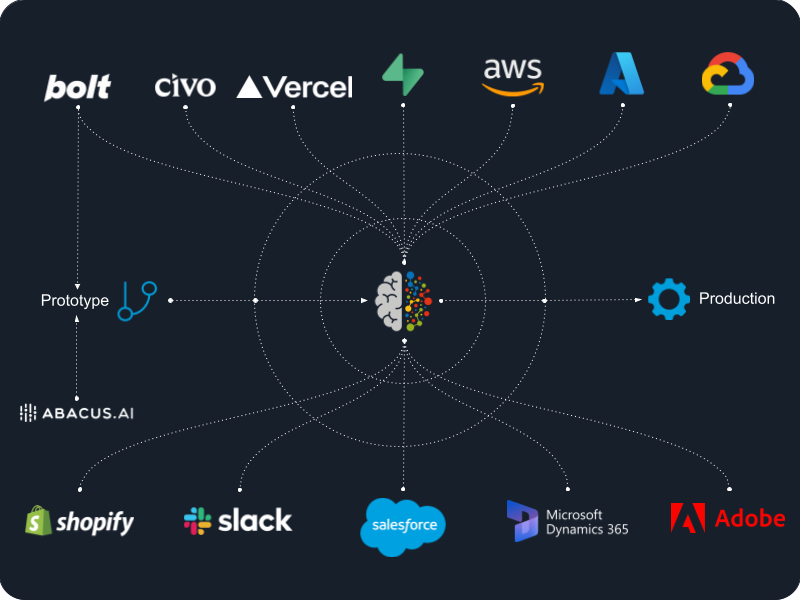
    When we move from Current State (As-Is) to Future State (To-Be) in any digital innovation, we always focus on optimising data. For example, in moving from say, Salesforce or HubSpot CRM to AI CRM. When we simplify business processes and tasks , we also apply tools, such as Abacus.ai Deep Agent4, to optimise the data.

  • Value.

    When we apply Design Thinking to maximise human receptivity and rapport, we also include the rigour of Value Engineering.

    Value Engineering was originally conceived by Lawrence D. Miles5, a General Electric engineer. Miles' techniques have saved design engineers, manufacturing engineers, purchasing agents and service providers millions of dollars.

    To quote Miles, it was necessary to show "why so much unnecessary costs exist in everything we do and how to identify, clarify, and separate costs which bear no relationship to customers' needs or desires."

    Value Engineering eliminates waste and determines value over price. This is calculating the cost of purchasing (or crucially, not purchasing) any high-value product or service in a timely manner. It is quantifying time-based value versus the cost of delay or doing nothing.

    As Value Engineers, we set the scene mapping your ideal customer's needs with your offering. This is where we apply Design Thinking to enable you to build receptivity, rapport, trust and truth with buyers - early and often.

    From a financial perspective, we start with a simple question for the buyer: What is the cost of NOT buying the product or service? Firstly, let's look at the Return On Investment (ROI) Model - a general formula:

    ROI = (Cost of Investment / Net Profit) × 100%

    We then create a custom ROI Model that looks at your Current State (As-Is) and compares to one or more Future State (To-Be) outcomes, related to a specific problem-solving solution - eg. applying AI CRM or AI Design technology.

  • Deliver.

    As the word implies, Deliver is turning everything we capture in Think, Simplify and Value activities into tangible Deliverables that move us to a Future State (To-Be) that meets your needs. It could be next generation AI CRM, it could be AI Design tools.

    Whatever you need, we know how to deliver digital innovation that works for you, where less is more. When you engage with Being Guided you pay for Deliverables, Not Hours. So we always engage with clarity and accountability.

  • Sell.

    At Being Guided, as our name implies, we started life focused on guided selling. We realised that even with the best guidance, the salesperson was still the one doing all the heavy lifting: manually logging every call, chasing down contact info, and feeding the beast of the CRM system. You weren't just being guided; you were being burdened.

    Octolane AI is the culmination of everything we learned at Being Guided. We realised that the ultimate form of guidance isn't a map, it’s a driver. We’ve moved from telling you where to go to building the engine that takes you there. Octolane is the first 'Self-Driving' CRM. We can help you take the next step with venture capital-funded Octolane AI.

  • Meet.

    Ian H Smith

    MA, FRSA, MIED, M.IDSA

    Meet your Design Thinker.